
What Happens When You Build Nature Prescriptions Before Healthcare Catches Up
Sweden became the first country where doctors prescribe travel and nature exposure as medical treatment. Patients download a referral, present to their GP, and get outdoor time written into their healthcare plan.
Here's what I thought when I read this: They're legitimizing something we've been building for years.
Not as policy. Not as healthcare innovation. As survival architecture for people the system left behind.
While Sweden experiments with prescribing nature through institutional frameworks, I've been constructing the operational infrastructure to make this work. Building recovery-centered outdoor experiences where transformation happens in environments, not clinical appointments.
This isn't about advocating for what's possible. It's an investigation into what exists when you stop waiting for institutions to validate what communities know.
The Infrastructure Gap Nobody's Looking At
Sweden is getting one thing right: they're treating nature as foundational to human health, not a lifestyle bonus. This matters.
For too long, healthcare systems have acted like healing only happens in clinics, hospitals, or through prescriptions. But our nervous systems, mental health, and sense of connection are shaped by the environments we spend time in.
What they're still missing is this: access alone is not the same thing as belonging.
You prescribe time outdoors. But if someone is isolated, dealing with trauma, in addiction recovery, financially strained, or doesn't feel safe or welcome in those spaces, the prescription only goes so far.
Nature is strong. But community, guidance, and consistency help turn outdoor exposure into real healing.
I've watched this play out hundreds of times at Sober Outdoors. Someone shows up to a hike with all the access they need. Transportation, gear, the physical ability to be there. On paper, they have everything.
But emotionally, they're still completely on the outside.
They're quiet, guarded, uncomfortable. Not because they don't want to be there, but because addiction isolates people so deeply. Being around healthy community feels foreign at first. People in recovery carry shame, social anxiety, fear of judgment, and this lingering belief they don't fit anywhere anymore.
So yes, they had access to the outdoors. But they didn't yet feel like they belonged in that space or with those people.
What had to change was not the trail. The human experience around the trail.
Our community leaders and other members intentionally slowed down, made conversation easy, removed pressure, and created a space where this person didn't have to perform or prove anything. They came back again. And again. Over time, they stopped standing on the edge of the group and started becoming part of things.
Eventually, they were encouraging newer people who felt how they once felt.
Belonging is built through repetition, safety, and shared experience. Nature opened the door. Community helped them walk through.
Designing Emotional Safety as Infrastructure
Traditional recovery systems struggle with this because they're built to manage risk, compliance, liability, and outcomes that are easier to measure than human trust.
They operate inside institutional models focusing on efficiency, documentation, diagnosis, scheduling, and symptom reduction. All of this has value. But there's little room for the slower, relational work helping people feel safe enough to open up, connect, and stay engaged.
Emotional safety gets treated like a personality trait of a good counselor rather than something the system itself is responsible for producing.
The approach becomes "hopefully this staff member is warm" instead of "how is this program structurally designed to reduce shame, lower social pressure, and help people feel they belong?"
This is a big difference.
At Sober Outdoors, we've learned belonging doesn't happen by accident. You have to build this into the structure of the experience.
We intentionally choose events and pacing that are approachable. Not every event needs to be intense, high-performance, or built for the most experienced person in the group. The minute an event feels like people have to keep up physically, socially, or culturally, you create pressure.
We want people to feel invited into the experience, not tested by things.
Our leaders aren't there to manage logistics or get people from point A to point B. They're there to set emotional pace. This means noticing who is hanging back, who seems anxious, who has shown up alone, and who may need a softer entry point into the group.
We work hard to remove unspoken barriers. People in recovery are often carrying shame, insecurity, or the fear they're "too much" or "not enough." So we don't create environments where people feel like they need the right gear, the right story, the right level of fitness, or the right social confidence to belong.
The structure has to communicate, both explicitly and implicitly, that showing up as you are is enough.
We don't leave emotional safety to chance. We build for this. When you do things well, slowing down and removing pressure stops being a nice intention and starts becoming part of the culture people feel.
How Healing Happens Sideways
Here's what traditional systems miss: healing often happens sideways, not head-on.
Things happen in conversation on a trail, in the absence of pressure, in shared laughter, in realizing you don't have to explain yourself to be understood.
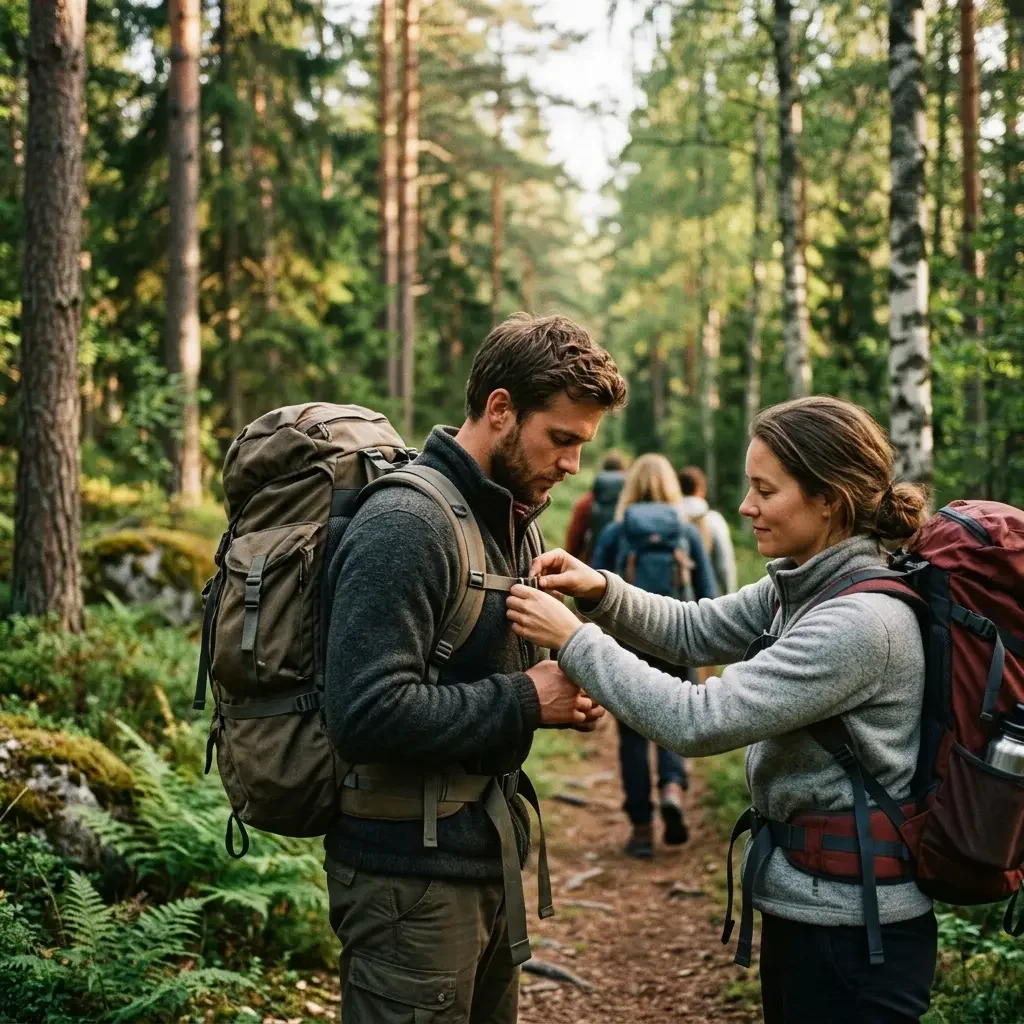
Last summer, we ran a multi-day backpacking trip. One participant (let's call him Mark) had been in and out of formal recovery programs for years. He came not expecting much, mostly looking for a change of scenery.
On the second day, while we were breaking camp, Mark was helping another participant who was struggling with a heavy pack. Small, practical gesture. He offered a tip, helped adjust the straps, carried a bit of the load.
The other participant thanked him, genuinely, for being dependable and calm under pressure.
In the sideways moment, Mark experienced a sense of competence, trust, and contribution. Things core to recovery but often missing in clinical settings.
He realized, almost unconsciously, he could support someone else, be part of a community, was capable of calm, reliable engagement. This moment didn't feel like "therapy" or "treatment," but shifted his sense of self more than hours in a counselor's office had in the past.
After that, he became more engaged with the group, volunteered to help others, and even started sharing openly during reflection circles.
The recovery work wasn't coming from structured interventions. Things were emerging naturally from participation, responsibility, and human connection in the context of the outdoors.
This is what I mean by sideways healing: the transformation happens through environment, action, and community. Through the scaffolding around recovery rather than through direct, deliberate work on things.
The Design Principles Behind Invisible Moments
These moments are forced or scripted. They have to feel natural, emergent, and safe. But you design the environment, pacing, and social architecture to make them more likely to occur.
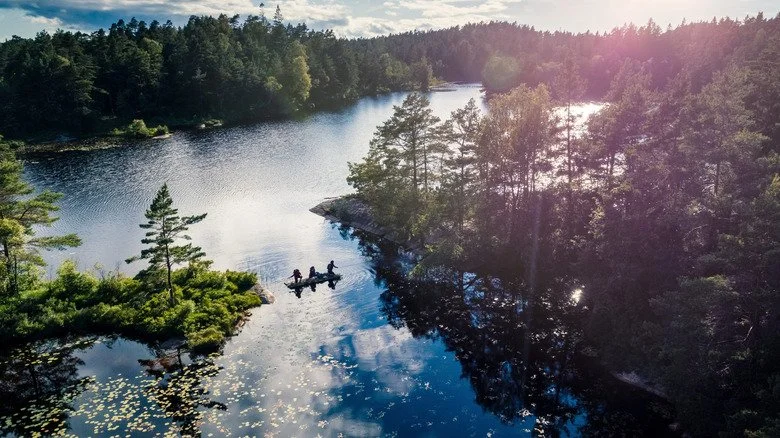
We prioritize embodied experience over explicit teaching. We design activities where participants are engaged with the environment or a task first (hiking, paddling, backpacking, setting up camp), not with their recovery as the main objective. The body, senses, and attention are occupied, which reduces mental resistance.
We structure for micro-choice and agency. Even small choices (where to step on a trail, when to take a break, what gear to carry) create subtle ownership over the experience. Ownership is the seed for trust and self-efficacy.
We use social architecture, not social pressure. We intentionally slow down group dynamics and model inclusive behaviors. Leaders are trained to notice who is quiet or hesitant and to provide indirect support rather than overt intervention.
On a winter snowshoe hike, we hit a steep incline. One participant (let's call her Lena) struggled physically and slowed down. Everyone else paused. No one said much. No coaching, no therapy exercises, no intervention. Silent presence, encouragement through body language and small nods.
When we reached the top, something subtle shifted. She smiled almost imperceptibly, relaxed her shoulders, and for the first time during the day, laughed at something another participant said.
That one laugh, that subtle release, marked a kind of internal recalibration.
She had tested herself, relied on the group indirectly, and recognized her own capability. No formal reflection or session happened at this moment, but things quietly rewired her sense of possibility.
Traditional systems struggle to recognize this because things don't fit neatly into a progress note, a metric, or a session plan. But for the participant, this transforms because these tiny, repeated moments of mastery and belonging accumulate into real confidence and self-trust.
The Economics of Decoupling Healing from Billing
Here's what makes this possible: we've fundamentally decoupled healing from billing.
Core participation in Sober Outdoors is free or extremely low-cost. Most people join events without paying anything upfront because many events are fully sponsored or covered by donations. Gear, transportation, or day-trip costs are often subsidized. Memberships are optional.
Compare this to traditional recovery systems. Even outpatient programs or community groups often require insurance, co-pays, or fees ranging into hundreds of dollars per month.
If someone goes through a traditional outpatient program for three months, they're looking at $5,500 to $12,500 total. Insurance may cover part, but co-pays, deductibles, and pre-approvals often add $200 to $500 per month out of pocket.
They get 1 to 3 structured group sessions per week, 1 to 2 hours each, mostly with peers in formal sessions. Time in supportive environments is mainly inside a clinical setting. Once discharged, ongoing support often requires additional cost or navigating other programs.
At Sober Outdoors, three months costs $0 to $150 total for unlimited events and community access.
Participants get multiple touchpoints per week: events, hikes, backpacking trips, reflection circles, casual social gatherings. Peer-driven, relational, and consistent. They see the same faces repeatedly. They experience safety, inclusion, and practice coping in real-world contexts, not clinical rooms.
Engagement is open-ended. Participants join as long as they like, with recurring events and familiar leaders. Belonging and peer networks are intentionally nurtured over months, sometimes years.
For a fraction of the cost, we provide more frequent, longer, and more relationally rich contact in real-world environments.
Our business model is deliberately lean, community-driven, and layered. A large portion of our leadership comes from peers and alumni who are invested in the mission. They lead events, mentor newcomers, and help maintain safety. This dramatically reduces staffing costs compared to a fully professionalized program.
Donations, grants, and partnerships fund gear, travel, and larger trips. Because we're mission-driven rather than insurance-driven, we allocate these resources strategically, focusing on impact rather than revenue per participant.
Traditional systems have no way to replicate this economically because they're structured around fee-for-service models, insurance reimbursement, and regulatory overhead.
Every session, staff hour, and service is tied to billing codes. This creates pressure to maximize revenue per participant, leaving little room for free, flexible, or peer-led experiences.
We're treating community, connection, and nature as infrastructure. This allows us to deliver more for less (more time, more engagement, more healing) without pricing anyone out.
What Sweden Will Discover
Sweden is getting the principle right. Recognizing nature is medicine. Being outdoors, moving in natural spaces, and connecting with peers has real, measurable health benefits.
Evidence shows associations between nature exposure and improved cognitive function, brain activity, blood pressure, mental health, physical activity, and sleep. Studies show there could be up to 7% fewer cases of depression and 9% fewer cases of high blood pressure if people met minimum nature exposure duration of 30 minutes or more.
This part will work, because things tap into something fundamental: our nervous systems and mental health respond to environment, rhythm, and community.
Where I think they'll struggle is the framework they're trying to use to deliver things.
Prescribing nature through the healthcare system means everything is tied to billing, compliance, and formalized sessions. This creates structural friction.
Visits might be limited, short, and scheduled, rather than recurring, immersive, and flexible. People may feel like this is another "medical task" to check off, rather than an invitation into a safe, relational experience.
Access will still be restricted to those who are inside the healthcare system, leaving out populations who might benefit most. People who are isolated, uninsured, or disconnected from formal care.
What they'll see is the biological and psychological benefits of nature in a traditional clinical sense. But they'll struggle to replicate the full ecosystem of belonging, repeated practice, and low-barrier access making programs like ours transformative.
The relational, peer-driven, repeated, low-pressure engagement making healing stick doesn't emerge naturally inside appointment slots and clinical oversight.
Those sideways, invisible moments of transformation (the confidence, belonging, and identity shifts) don't fit neatly into billing codes or session notes.
We Built What They're Still Conceptualizing
While Sweden's initiative positions the country as a pioneer in health-driven tourism, this is not part of the national healthcare system. Sweden's initiative is marketing. We've built infrastructure.
We didn't wait for permission. We didn't wait for healthcare systems to recognize recovery thrives in motion, transformation happens in environments, belonging is built through repeated, low-stakes entry points in natural spaces.
We built the alternative while the system catches up.
The structural difference is huge: what works best often happens outside the clinic, in spaces that aren't tied to billing codes, schedules, or paperwork.
Healthcare systems aren't built for this. Community-driven models are.
Two out of three respondents in a recent international survey would be open to spending more time in nature if a doctor prescribed this. Yet in the United States, 64% of adults had never heard of a nature prescription.
This massive awareness gap represents both the opportunity and the infrastructure void we've been filling.
We're not advocating for what's possible. We're operating what exists. We're the proof-of-concept infrastructure healthcare systems will eventually need.
Nature isn't the prescription. Connection without substances is the innovation. Outdoor spaces are the terrain where this becomes possible.
And we're here. Building belonging where systems have left voids. Creating conditions for transformation in environments designed for this.
Whether you're in early recovery, sober-curious, or looking for community reflecting your values, this is the terrain where people finally recognize themselves.
We're not waiting for healthcare to catch up.
We're building what works.
Right now.
