Finding Stillness at 14,000 Feet: How High Altitude Changed My Recovery
Jordan Reed | April 6, 2026 | 6 min read
There is something that happens to the mind above the treeline. A quiet that has nothing to do with silence, and everything to do with perspective.
I want to be careful here, because I am not a poet. I am a guy who got sober and started walking uphill and accidentally found the only therapist who has never once asked me how that makes me feel. The mountain just watches. It waits. And when you finally shut up long enough to notice, it gives you something back that no meeting room or meditation app or well meaning friend has ever quite managed to hand you.
It gives you nothing. Beautiful, enormous, perfectly empty nothing.
The Day I Cried on a Rock
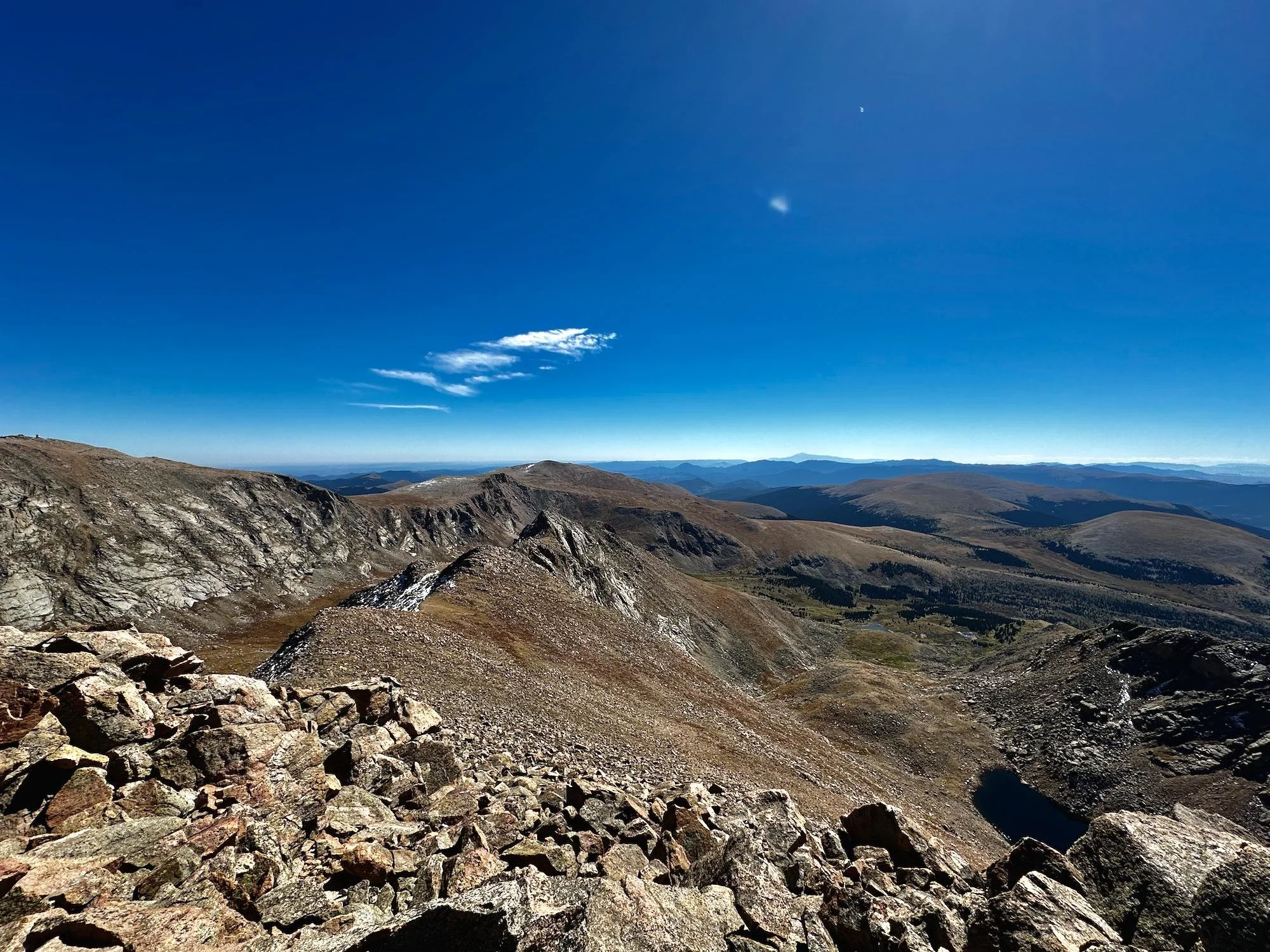
The first time I hiked above 14,000 feet in sobriety, I sat on a granite slab near the summit of Mount Bierstadt and cried.
I should tell you that I am not typically a crier. I am the kind of person who will clench his jaw through a funeral and then fall apart two weeks later over a song in a gas station. So when the tears came up there, sitting on cold stone with the wind pulling at my jacket, I was genuinely confused by them. There was no trigger. No memory bubbling up. No grief I could name.
It was just... relief. Like my body had been holding a single, clenched breath for years, and it finally decided that this spot, at 14,060 feet, surrounded by absolutely no one who needed anything from me, was safe enough to let go.
“I sat there for a long time. I am not going to tell you how long because honestly I lost track, and I think that was the whole point.”
What Altitude Does to the Anxious Mind
Here is the part where I pretend to understand science.
There is a physiological reason why high altitude environments calm the nervous system. The thinner air, the cooler temperatures, the physical demand of every single step conspire to pull your mind out of its ordinary loops and into the immediate moment. Your brain, which usually has the bandwidth to run fourteen anxious simulations of tomorrow while also replaying that thing you said at a party in 2017, suddenly has one job: keep you breathing, keep you moving, keep you here.
“The mountain does not care about your past. It only asks what you can do right now, with the legs you have, on the trail in front of you.”
For someone in recovery, this is a small miracle. Because the anxious mind is a time traveler. It lives in regret and projection. It scrolls backward through shame and forward through fear and almost never lands in the present tense. But at 12,000 feet? The present tense is the only channel available. The altitude basically unplugs the router on every other frequency.
I have tried to explain this to people who do not hike, and I can see the polite nodding. The "that's great for you" face. I get it. It sounds like bumper sticker wisdom. But until you have felt your own spiraling mind go suddenly, forcibly quiet because your lungs are too busy to let your brain run its usual programming, you do not really know what I mean. And I wish I could hand it to you in a neater package, but some truths are inconveniently experiential.
The First Ten Minutes Are Terrible
I should be honest about something else, too. The beginning of every hike is miserable for me. Every single one. The parking lot energy, the forced enthusiasm, the part where your body is not yet warm and your pack feels stupid and you are already thinking about when you can reasonably turn around without looking like a quitter.
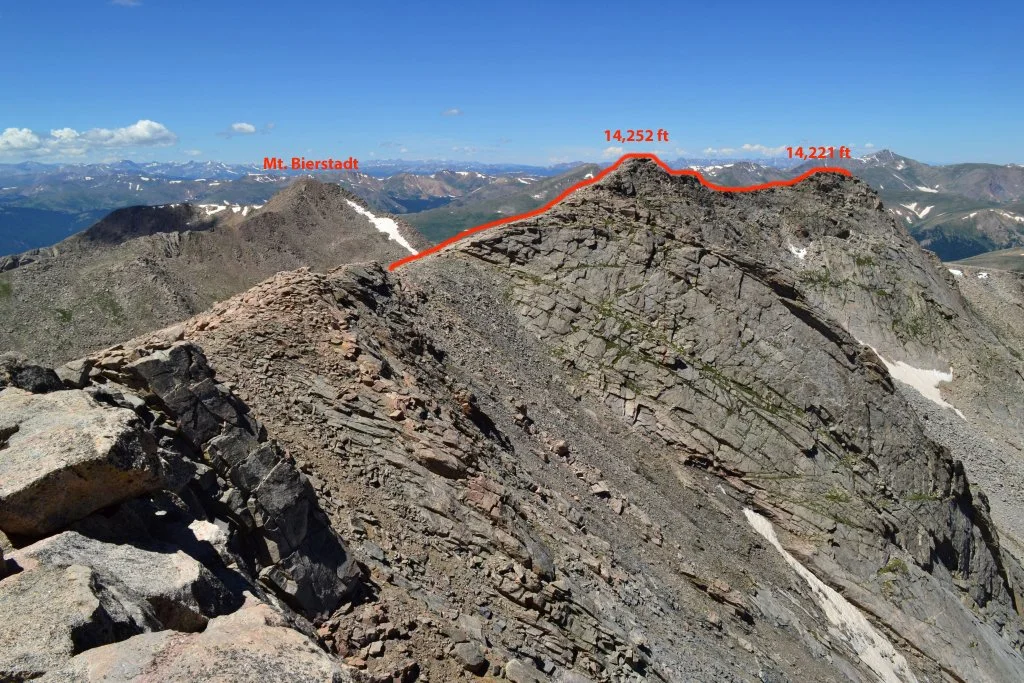
I almost quit the Bierstadt hike thirty minutes in. The willows near the base were soaked, my boots were wet, and a small, mean voice in my head was making a very persuasive argument about how my couch had never given me trench foot.
But I kept going. Not out of bravery. Out of stubbornness, which is just bravery's less photogenic cousin.
And then something shifted. Somewhere around 12,500 feet, the willows dropped away, the trail turned to rock, and my field of vision opened up into something so wide and sharp and quiet that my brain forgot what it had been complaining about. The wind was doing something strange to the ridge. The light was doing something stranger. And suddenly the only voice in my head was a very small one saying, oh.
That is the moment I chase now. Not the summit. Not the photo. Not the accomplishment. Just the oh. The moment where the scenery gets big enough to make your problems the correct size, which is to say, small.
Why I Kept Going Back
After Bierstadt, I started seeking altitude the way I used to seek other things. With urgency. With something close to need. I will not compare the feeling to a high because I am done with that metaphor and honestly it is not accurate anyway. Getting high always felt like leaving. Getting to altitude feels like arriving.
I did Grays Peak that summer. Then Torreys. Then Quandary, which sounds like an SAT word but is actually just a very long walk through increasingly beautiful misery. I was alone for most of these, which was both the appeal and the risk. In recovery, isolation can be a warning sign. But solitude? Solitude chosen on purpose, in a place where the air is so thin that your thoughts lose their usual density? That is something else entirely.
I will admit that I was shy about telling people what was happening to me on these hikes. It felt too soft. Too spiritual for someone who has spent most of his life armoring up with sarcasm and a well curated playlist. But the truth kept being the truth, and eventually I stopped trying to make it cooler than it was: I was a person in recovery who had found a kind of stillness that nothing else had given me, and it lived above the treeline.
The Trail to Mount Bierstadt
For those of you reading this and feeling that small pull, let me give you the practical version.
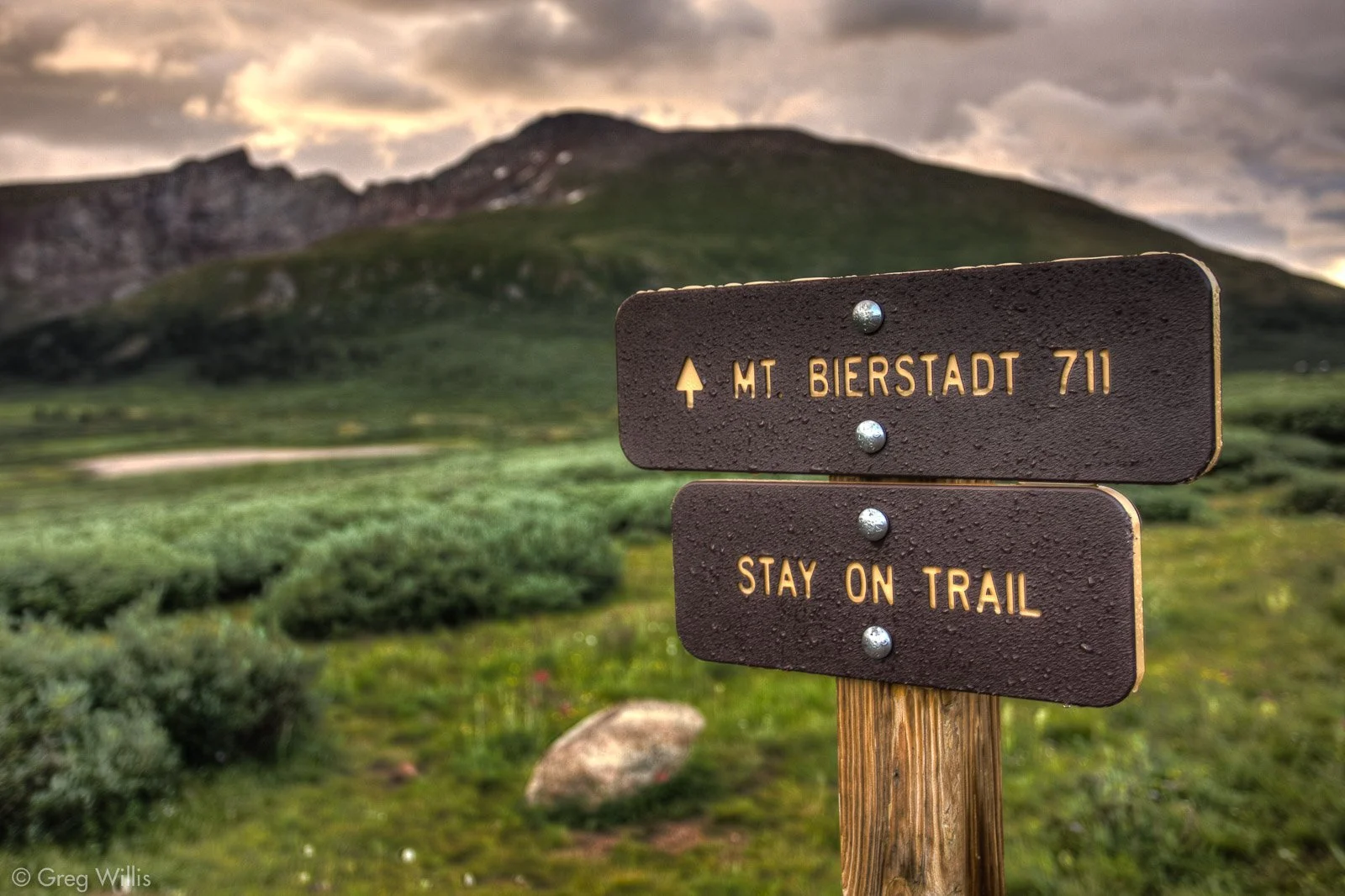
Mount Bierstadt sits in the Front Range of the Colorado Rockies, just west of Denver via Interstate 70. The standard route from the Guanella Pass trailhead is 7 miles round trip with about 2,850 feet of elevation gain. It is considered one of the more approachable fourteeners, which means it is still hard, but it is hard in a way that feels fair.
You will start in willows. You will curse the willows. Then the willows will end and the mountain will open up and you will forget every negative thought you had about the willows.
Bring water. Bring more water than you think. Start early because afternoon storms above treeline are not philosophical. They are electrical. And wear layers, because 60 degrees at the trailhead and 30 degrees at the summit is a very real Tuesday in Colorado.
What I Found Up There
I am not going to pretend that hiking at altitude fixed me. Recovery is not a thing you fix. It is a thing you maintain, like a garden or a friendship or a 2003 Subaru that has no business still running but somehow does.
But what altitude gave me was a physical location for stillness. A coordinate on the map where my mind could stop. And for someone whose mind has been the primary antagonist in his own story for most of his life, that is not a small thing. That is the whole thing.
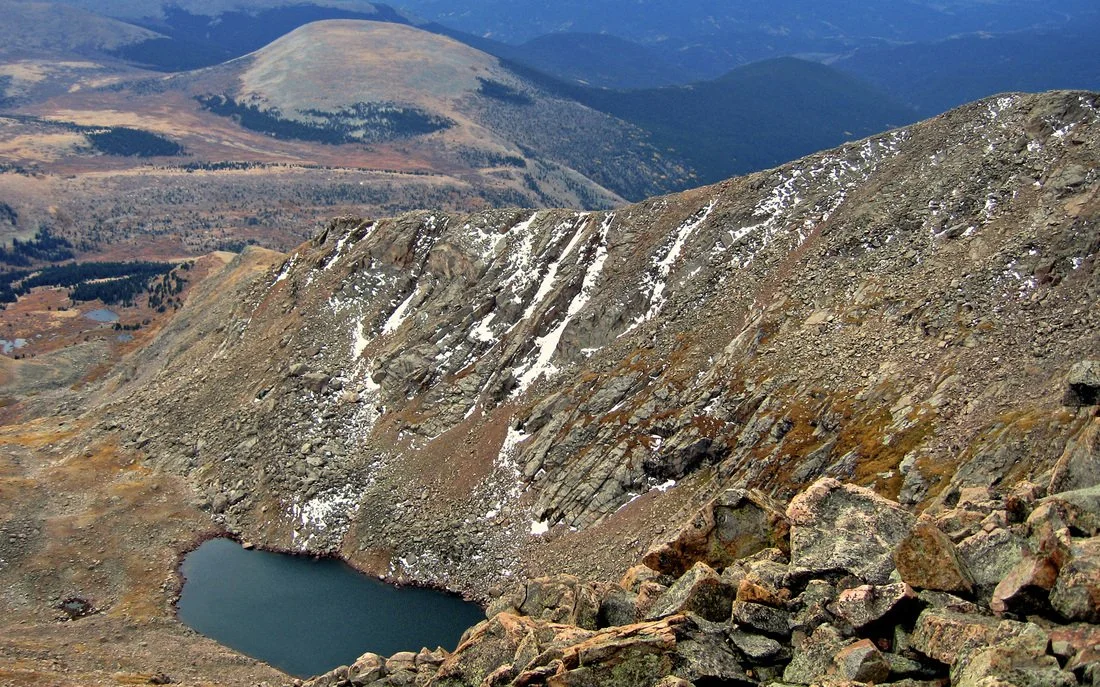
I think about that granite slab on Bierstadt more than I probably should. I think about the wind, the way it sounded like something being erased. I think about how quiet a person can be when the world gets loud enough in all the right ways.
“If you are reading this and you are sober and you are looking for the thing that might finally give your brain permission to rest, I am not saying it is a mountain. I am saying it might be.”
And if you want to find out, you do not have to do it alone.
Join the community at soberoutdoors.org.
We will walk with you.
Even through the willows.
-Jordan R.